
Dog Playpens

How to Potty Train a Puppy Using a Playpen

Dog Training Basics: A Complete Guide for New Owners

WHAT PUPPIES CAN AND CANNOT DO AT 4–8 WEEKS OLD
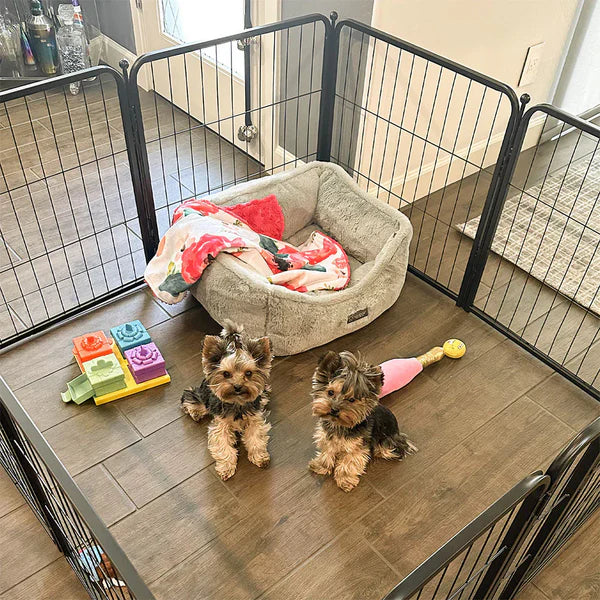
How to Stop Puppy from Crying in Crate and Why Dog Playpen is the Better Alternative
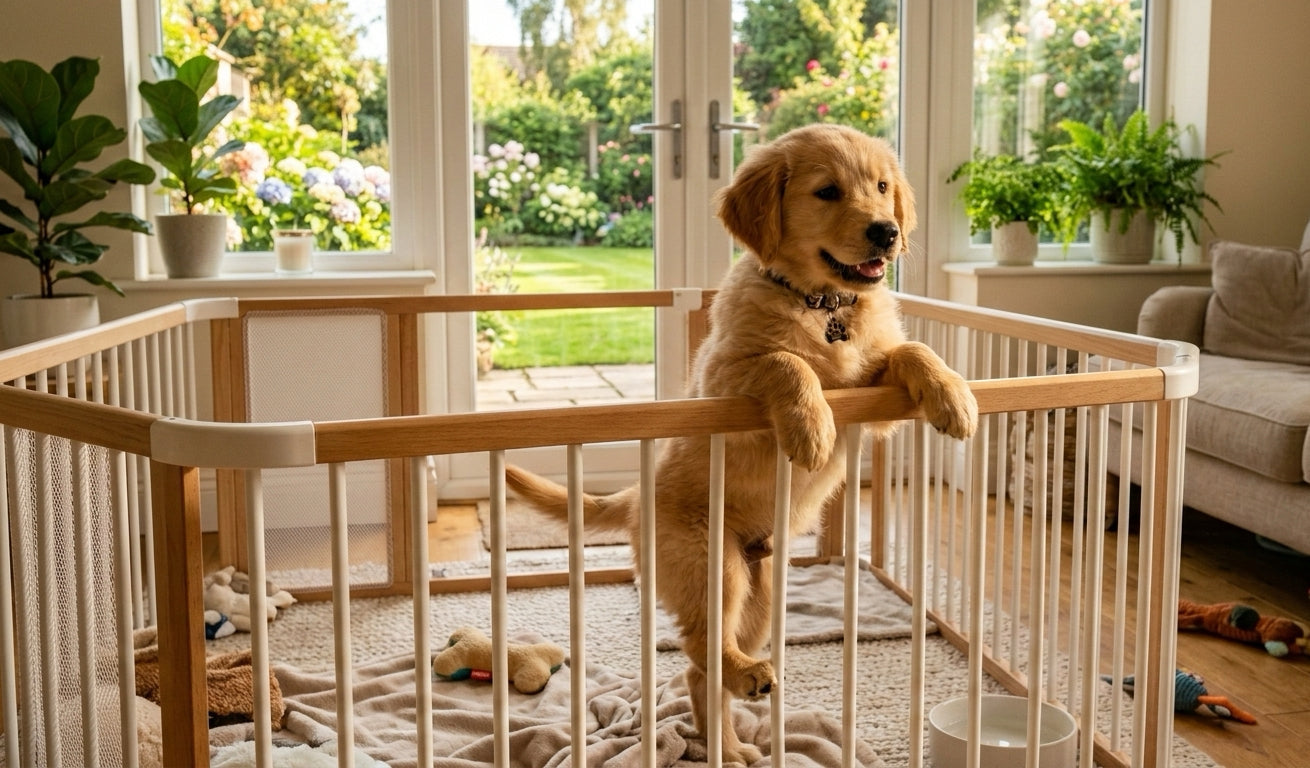
Common Mistakes That Make Puppies Try to Escape Playpens (And How to Fix Them)
Puppies don’t try to escape playpens without a reason. In most cases, repeated escape attempts are triggered by common owner mistakes such as insufficient exercise, overlong confinement, accidental reinforcement of escape behavior, or using a playpen that isn’t tall or stable enough. Reputable sources like the American Kennel Club (AKC), ASPCA, and the Merck Veterinary Manual confirm that boredom, excess energy, and rewarded behaviors quickly turn occasional attempts into habits. The good news is that escape behavior is preventable. By addressing physical and mental stimulation needs, creating a comfortable pen environment, and choosing a structurally secure playpen setup, you can dramatically reduce breakout attempts. A properly designed and appropriately sized playpen supports training, improves safety, and helps your puppy develop healthy independence without unnecessary stress or frustration.

Is an Escape-Proof Playpen Necessary for High-Energy Puppies?
High-energy puppies often attempt to escape traditional playpens due to excess energy, curiosity, or reinforcement of successful escapes. Veterinary and behavior experts from AKC, ASPCA, and Merck confirm that early escape behavior can quickly become habitual. An escape-resistant playpen — particularly one with taller panels, stable construction, and smooth surfaces like acrylic designs — helps reduce injury risks and prevents reinforcement of unwanted behavior. However, proper exercise and training remain essential for long-term success.
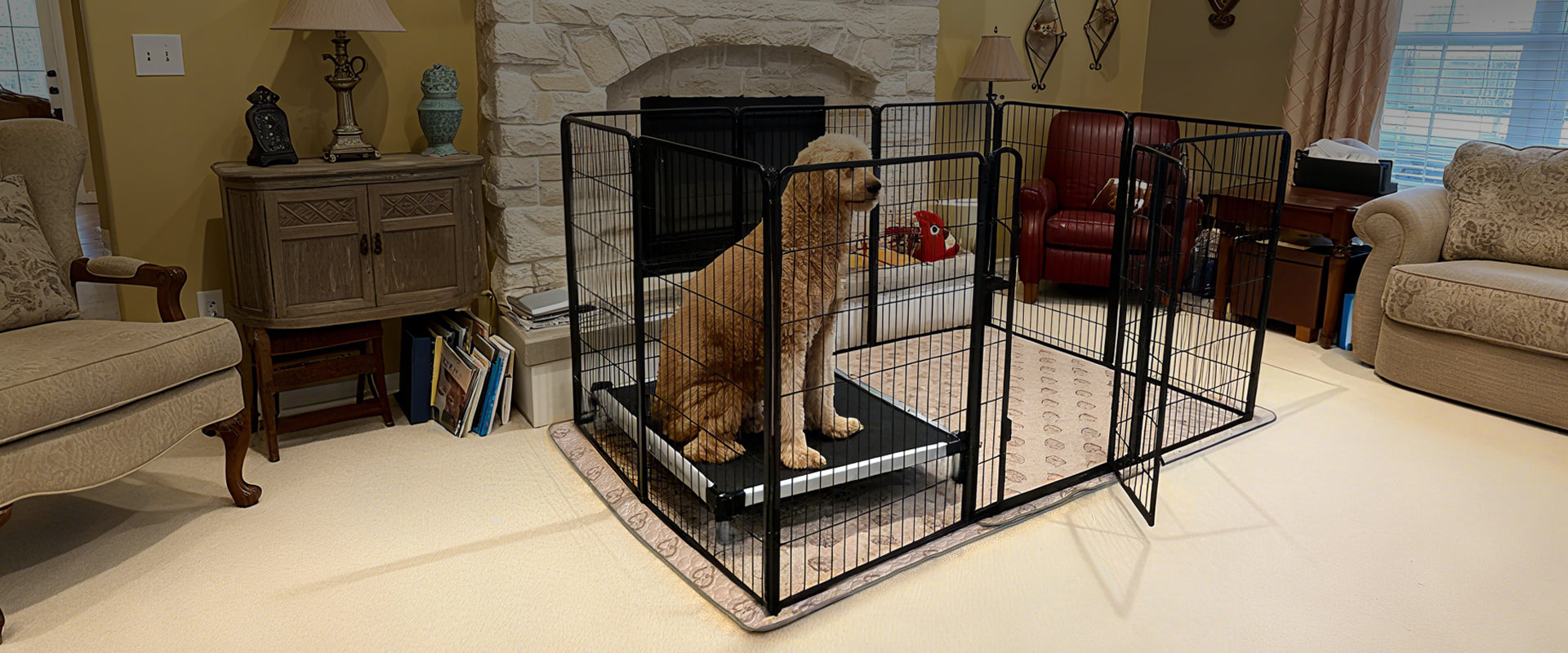
How to Choose the Best Indoor Dog Playpen in 2026
Indoor dog playpens remain an essential tool for training, structure, and safety in 2026. This guide explains how to choose the right indoor playpen based on dog size, age, behavior, and home environment. It reviews key considerations such as panel material, height, visibility, and layout flexibility, while introducing the full range of FXW dog playpen options. From classic metal playpens and modular systems to the newer FXW Auraspace Acrylic Indoor Dog Playpen for puppies and small dogs, each design serves a different purpose. Rather than focusing on a single solution, the article emphasizes matching the playpen to your dog’s training needs and daily routine. When chosen correctly, an indoor playpen supports calm behavior, reduces escape attempts, and integrates smoothly into modern living spaces.
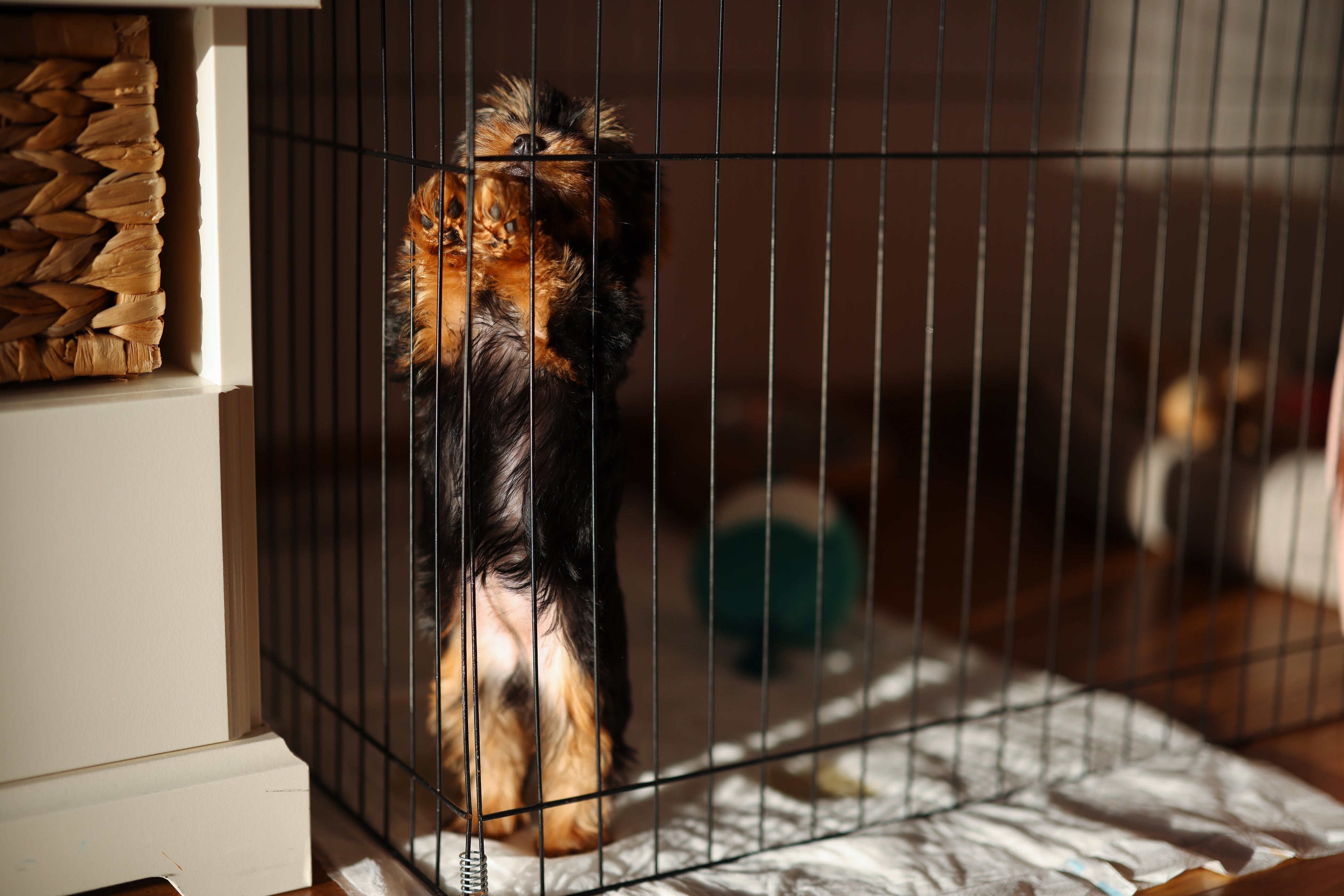
How to Stop a Puppy From Jumping Out of a Playpen
Puppies jumping out of playpens is a common issue that often stems from excess energy, stress, or an unsuitable playpen design. This article explains why puppies try to escape and how owners can stop the behavior safely and effectively. It covers the importance of proper exercise, calm routines, and removing climbing opportunities that encourage jumping. The article also highlights how acrylic playpens differ from traditional wire pens by eliminating grip points and reducing frustration. The FXW Auraspace Acrylic Indoor Playpen is introduced as a practical solution that helps puppies feel secure while maintaining visibility and comfort. With the right setup and training approach, most puppies can learn to relax inside their playpen and develop healthier boundaries at home.
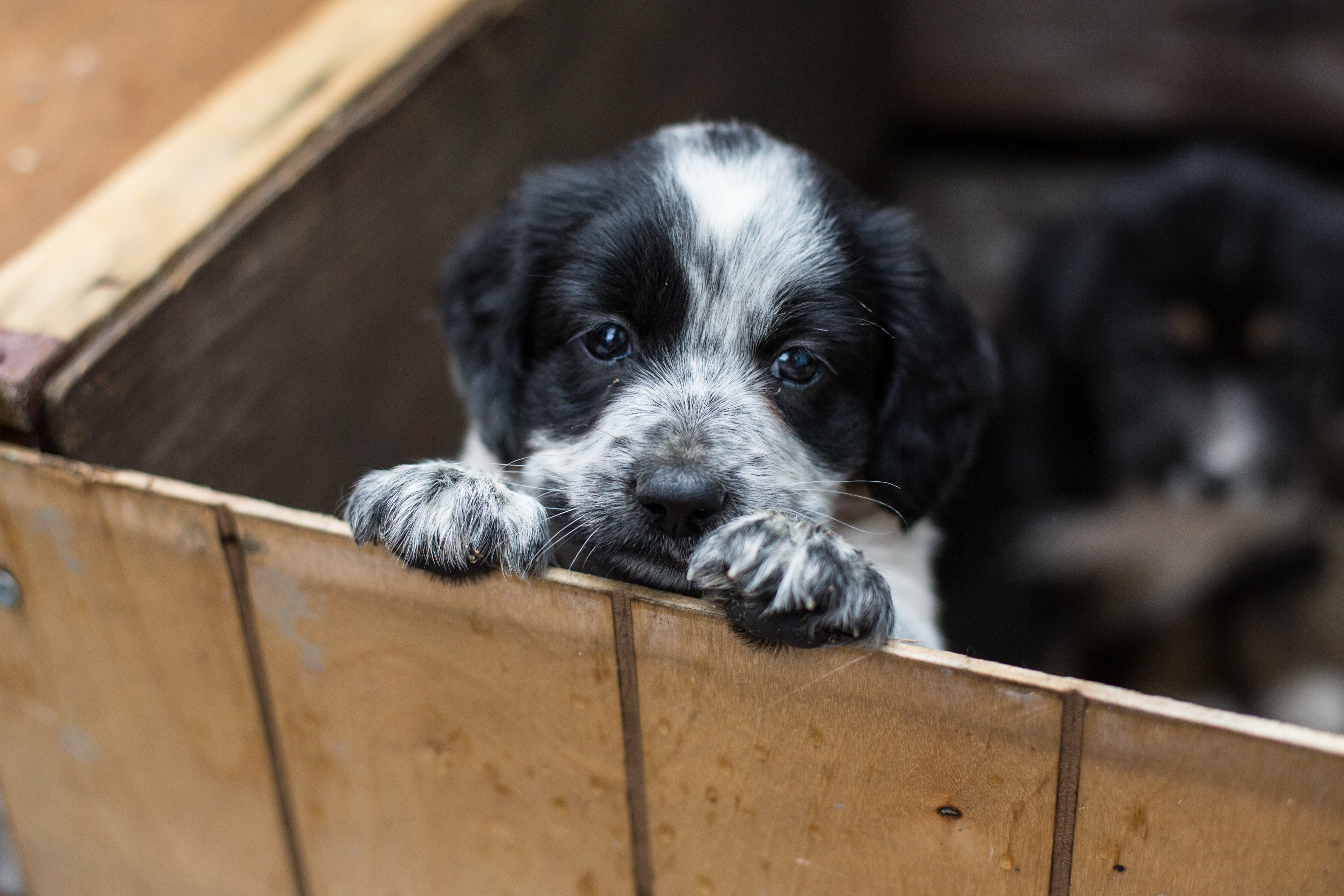
How Tall Should a Puppy Playpen Be? Keeping Your Little Explorer Safe and Grounded