
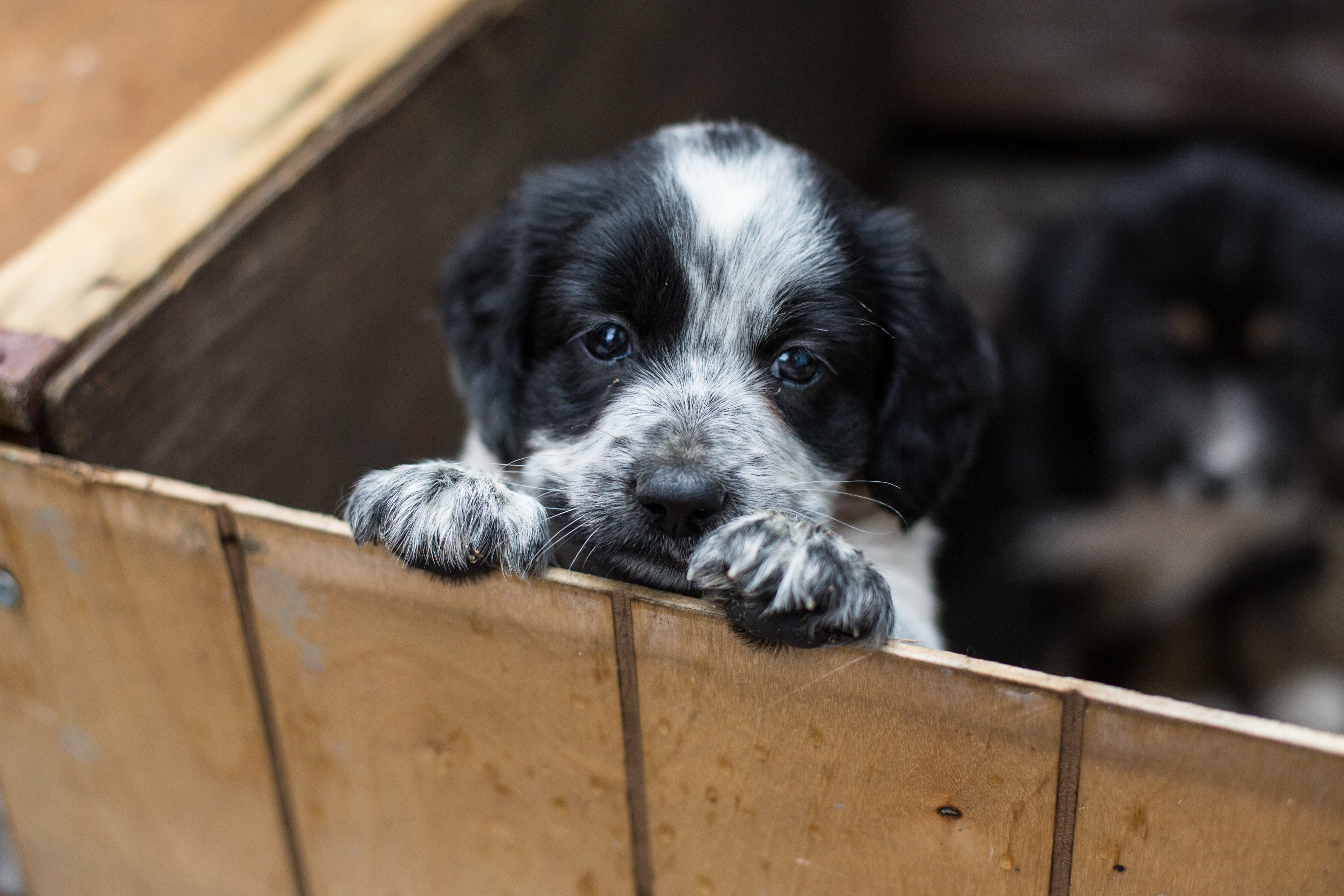
We’ve all been there. You spend twenty minutes setting up the "perfect" puppy zone. You lay out the plush bed, the squeaky toys, and the water bowl. You turn your back for one second to grab a cup of coffee, and—thump—your little furry acrobat is sitting on the kitchen floor, wagging their tail like they’ve just won an Olympic gold medal in the high jump.
It’s a heart-stopping moment for any pet parent. Beyond the "how did they do that?" mystery, there is the very real worry about them getting hurt or getting into something they shouldn't while you aren't looking.
Finding the right height for a puppy playpen isn't just about inches; it’s about peace of mind. It’s about creating a "Yes Space" where your pup can be themselves without you constantly hovering like a helicopter parent. Let’s dive deep into how to outsmart your little escape artist and choose a pen that grows with them.
Table of contents
The "Great Escape" Struggle: Why Height Matters More Than You Think

When we bring a new puppy home, we often underestimate their athleticism. That tiny ball of fluff is essentially a spring-loaded explorer.
The Problem: The Unexpected Athlete
Most new owners pick a playpen based on how the puppy looks right now. But puppies grow at a lightning-fast rate. A height that works at 8 weeks old might be a mere "speed bump" by week 12.
The Agitation: The Risks of the "Leaper"
If a playpen is too short, the risks go beyond just "getting out."
-
Physical Injury & Joint Health: This is the most critical point. According to the experts at the American Kennel Club (AKC), a puppy’s skeletal frame isn't fully developed until they are 12–18 months old. Repetitive jumping or landing from high heights can put immense strain on their "growth plates"—the soft areas at the ends of long bones.
-
Long-Term Impact: Medical experts emphasize that high-impact activities, such as jumping over fences or landing abruptly on hard floors, can lead to permanent joint damage or exacerbate conditions like hip dysplasia later in life. We want to keep those "achy grown-up joints" from feeling rusty before their time by encouraging four paws on the floor today.
-
The Reward Cycle: Once a puppy realizes they can escape, it becomes a self-rewarding game. They become "escape motivated," making future training much harder because they’ve learned that boundaries are just suggestions.
The Solution: The FXW "Goldilocks" Approach
The goal is to find a height that is tall enough to discourage jumping but low enough that you don't feel like you're building a fortress in your living room. Whether you need the sleek, modern look of the Homeplus or the rugged portability of the Rollick, FXW designs with "escape-proofing" in mind.
Calculating the Perfect Height: A Breed-by-Breed Guide
There is no "one size fits all" in the dog world. A Chihuahua and a Great Dane have very different ideas of what constitutes a "wall."
1. Small & Toy Breeds (The Tiny Sprinters)

Examples: Pomeranians, Yorkies, Maltipoos.
-
The Height: 24 inches (2 feet).
-
The Logic: While these guys are small, they are often surprisingly springy. A 24-inch height, like our MiniPaws Dog Playpen, provides a secure boundary that keeps them contained without making them feel isolated from the family.
2. Medium Breeds (The Athletic Middle-Weights)
Examples: French Bulldogs, Beagles, Cocker Spaniels.
-
The Height: 32 inches.
-
The Logic: These breeds have more "launch power." The FXW Homeplus at 32 inches is the sweet spot. It’s tall enough to deter a Frenchie’s "zoomie" jump but still allows you to reach over and grab them easily.
3. Large & High-Energy Breeds (The High Jumpers)
Examples: Labradors, Goldens, Border Collies, Aussies.
-
The Height: 40 to 45 inches.
-
The Logic: If you have a pup destined for the 60lb+ club, go tall early. The Rollick Dog Playpen offers taller panel options that ensure your future athlete stays safely inside their "adventure zone."

Comparing the FXW Lineup: Which One Fits Your Life?
Choosing a playpen is about matching your lifestyle to your dog’s personality. Let’s look at how the FXW family stacks up.
The Indoor Socialite: AuraSpace & Homeplus

If your puppy stays primarily in the heart of the home, you want something that looks like furniture, not a cage.
-
AuraSpace Acrylic Playpen: This is for the "visual" puppy. Some pups feel anxious when they can't see you clearly. The crystal-clear panels provide a 360-degree view, reducing the urge to jump up to see where you went.
-
Homeplus Dog Playpen: Featuring a "life-centric" design, this pen is perfect for senior dogs with achy joints or puppies who need a sturdy, stable environment. The bars are spaced specifically to prevent climbing.
The Outdoor Adventurer: Rollick
For the family that loves the RV life or weekend camping, the Rollick Dog Playpen is the gold standard.
-
Why it’s Escape-Proof: Outdoors, puppies are more likely to try and "climb" to get to a squirrel or a falling leaf. The Rollick’s stakes secure it firmly into the ground, so a jumping puppy won't knock the whole fence over—a common issue with flimsy portable pens.
The Small-Scale Specialist: MiniPaws
Specifically designed for the "littles," MiniPaws focuses on preventing "the squeeze." It’s not just about height; it’s about the gap between bars. If your puppy can get their head through, their body is likely to follow!
Beyond Height: 3 Secrets to an Escape-Proof Playpen

Even a 50-inch fence won't stop a bored, determined puppy. To truly prevent jumping and climbing, we have to look at the "Psychology of the Pen."
1. Watch Out for the "Ladder Effect"
Many puppies don't jump—they climb. Look at your playpen’s layout. Are there horizontal bars that act like ladder rungs?
-
FXW Tip: Our pens use vertical-focused designs to ensure there are no easy footholds for tiny paws to gain leverage.
2. The "No-Launch" Zone
Be careful what you put inside the pen. If you place a dog house or a large plastic crate right against the fence, your puppy will use it as a launching pad.
-
Keep furniture and bulky toys in the center of the pen, away from the perimeter.
3. Make the "Inside" Better than the "Outside"
Dogs jump because they think the party is happening on the other side of the fence.
-
Mental Stimulation: Use "brain games." A snuffle mat or a stuffed frozen treat inside the pen keeps their nose down. If their nose is on the ground, their paws won't be in the air!
Real-Life Scenario: The Case of "Rocket," the Beagle
One of our customers, Sarah, had a Beagle puppy named Rocket. True to his name, Rocket could clear a standard 24-inch pen by the time he was 4 months old. Sarah was frustrated—she couldn't even shower without worrying Rocket would "vault" the fence and find the kitchen trash.
We recommended the 32-inch Homeplus. Not only did the extra height stop the jumping, but the sturdy weight of the panels meant Rocket couldn't "scoot" the pen across the floor to create a gap. Sarah added a soft rug and a few puzzle toys, and suddenly, Rocket viewed his pen as his "den" rather than his "jail."
Expert’s Corner: 3 Tips for a Happy Pen Life
-
The "Chin Test": When your puppy stands on their hind legs, the top of the playpen should ideally be at least 4-6 inches above their head.
-
Positive Association Only: Never use the playpen as a "time out" for bad behavior. It should be a place where good things (treats, naps, toys) happen.
-
Safety First: Always remove your puppy's collar before putting them in the playpen. This prevents any accidental snagging on the panels if they do try to climb.
Ready to Create a Safe Space?
Your puppy deserves a place where they can play safely, and you deserve a break from the constant "puppy patrol." Don't wait for the first "great escape" to upgrade your setup.
Explore the FXW Collection:
-
Shop the Homeplus Collection for a stylish, secure indoor home.
-
Check out the Rollick Collection for your next outdoor adventure.
Would you like me to help you calculate the exact number of panels you’ll need for your specific room dimensions?
Summary
Stop the "Great Escape" before it starts! This guide dives into the science of choosing the perfect playpen height for your puppy. We explore how the right height—ranging from 24 to 45 inches—protects your pup’s developing joints, prevents "escape-motivated" behavior, and matches their specific breed energy. Learn how the FXW collection (Homeplus, Rollick, and MiniPaws) uses vertical-focused designs to outsmart climbers and create a true "Yes Space" for your furry friend.
FAQs
1. How do I know exactly how tall my puppy's playpen should be?
A great rule of thumb is the "Chin Test." When your puppy stands on their hind legs, the top of the playpen should be at least 4 to 6 inches above their head. This extra height discourages them from trying to hook their paws over the top and vaulting over.
2. Can jumping out of a playpen actually hurt my puppy long-term?
Yes, significantly. Experts from the AKC note that a puppy’s skeletal frame isn't fully developed until 12–18 months. Repetitive jumping or landing on hard surfaces can damage "growth plates," potentially leading to permanent joint issues or hip dysplasia later in life.
3. My puppy doesn't jump, but they climb. How can I stop this?
Look for a playpen with a vertical bar design. Many puppies use horizontal bars like ladder rungs to climb out. FXW pens, like the Homeplus, utilize vertical-focused layouts to eliminate footholds, making it nearly impossible for tiny paws to gain leverage.
4. Should I buy a tall playpen now, or wait until my puppy grows?
If you have a medium to large breed (like a Lab or Golden), it is best to go tall early. Puppies grow at lightning speed; a 24-inch pen might work at 8 weeks but become a "speed bump" by 12 weeks. Buying for their adult height saves you money and keeps their training consistent.
5. Where is the safest place to put a dog house or crate inside the pen?
Always place bulky items like crates or large toys in the center of the pen. If placed against the perimeter, your puppy will use the roof as a "launching pad" to hop over the fence, regardless of how tall the playpen is.

Share:
Demand Barking: Why My Dog Won’t Stop "Talking" and How to Create a Peaceful Home Together
How to Stop a Puppy From Jumping Out of a Playpen