
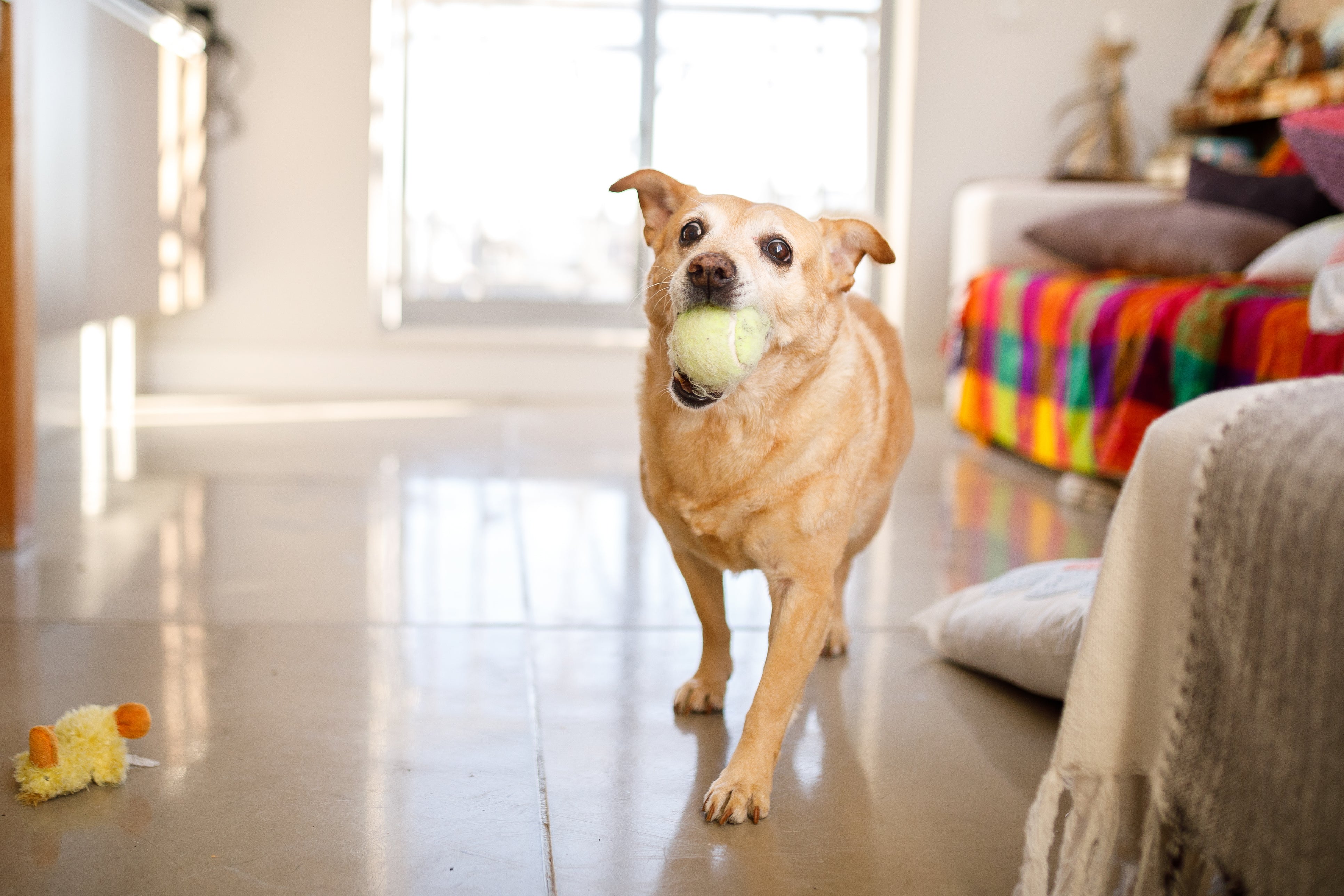
1. The Anatomy of Aging: Understanding the Senior Canine Shift
Aging in dogs is not merely a change in coat color or a decrease in energy; it is a complex physiological transformation. To care for a senior dog effectively, we must first understand the biological hurdles they face daily.
Osteoarthritis and Joint Degeneration

Statistically, nearly 80% of dogs over the age of eight suffer from some form of degenerative joint disease. Osteoarthritis causes the protective cartilage in joints to wear down, leading to bone-on-bone friction. This makes every movement—especially jumping or stepping over obstacles—an exercise in pain management. To help alleviate this discomfort, many owners use an FXW elevated dog bed, which provides firm, low-impact support that reduces pressure on an aging dog's aching joints.
The Loss of Proprioception
Proprioception is a dog's "body awareness"—the ability of the brain to know where the limbs are positioned without looking at them. In senior dogs, neurological pathways can slow down. This is why you might notice your older dog "scuffing" their paws on the ground or tripping over small rugs. A standard 2-inch threshold at the entrance of a dog pen suddenly becomes a mountain they cannot easily climb.
2. Why Traditional Crates Fail Our Senior Companions

For years, the standard advice for dog owners was to use a wire or plastic crate. While effective for puppy potty training, these "boxes" often become counterproductive as a dog ages.
-
The "Step-Up" Danger: Most crates have a raised metal lip at the entrance. For a dog with hip dysplasia, lifting a hind leg to clear that lip puts immense torque on the pelvic floor.
-
Restricted Airflow and Vision: Aging dogs often develop Canine Cognitive Dysfunction (CCD), similar to Alzheimer’s. Being enclosed in a dark, cramped space can trigger "sundowners" syndrome, causing pacing and distress.
-
The "Den" vs. The "Cage": A senior dog needs a sanctuary, not a cage. They need room to stretch their stiff limbs fully without hitting cold metal bars.
3. Engineering the Solution: The FXW Philosophy of "Barrier-Free" Living

At FXW, our design team collaborated with behavioral experts to move beyond the "cage" mentality. This led to the creation of the Homeplus Series, an indoor sanctuary specifically optimized for accessibility.
The Power of the Zero-Threshold Entry
The hallmark of the FXW Homeplus is the threshold-free door. By removing the bottom bar found in almost every other playpen on the market, we have eliminated the #1 tripping hazard for senior dogs. This allows a dog with limited mobility to walk into their safe space with their head held high, maintaining their dignity and physical safety.
Modular Flexibility for Interior Design
Unlike rigid crates, the Homeplus is modular. If your dog needs more space to pace comfortably or requires a specific shape to fit an orthopedic bed, the panels can be rearranged in seconds. It blends into your home’s aesthetic while providing the professional-grade security your pet deserves.
4. Designing the Ultimate Indoor Sanctuary: A Step-by-Step Guide
Creating a safe zone involves more than just setting up a fence. It requires a holistic approach to the environment.
Step 1: Strategic Placement
Position the FXW sanctuary in a "low-traffic but high-visibility" area. Senior dogs often feel anxious if they are isolated from the family, but they also need to be protected from being bumped into by children or younger, high-energy pets.
Step 2: Traction and Surface Stability
Hardwood and tile floors are the enemies of the senior dog. Inside your FXW pen, ensure you use a low-pile, non-slip rug. This gives the dog the necessary "grip" to stand up from a lying position. The Homeplus panels include rubber feet to ensure the structure doesn't slide when the dog leans against it for balance.
Step 3: Orthopedic Integration
At this stage of life, a standard dog bed isn't enough. Use a high-density memory foam bed that supports the pressure points of the hips and shoulders. Place it within the Homeplus area so it becomes their primary place of rest.
5. Behavioral Transition: Helping Your Senior Dog Adapt
You can teach an old dog new tricks, but you must lead with empathy.
-
Positive Association: Start by placing high-value treats (like freeze-dried liver) inside the FXW pen with the door wide open.
-
Scent Comfort: Place an unwashed t-shirt of yours inside the sanctuary. For a senior dog whose sight and hearing might be fading, scent is their strongest link to security.
-
The "Open Door" Policy: Initially, keep the FXW door open at all times. Let them discover that this is a place of comfort, not restriction.
6. Beyond the Home: A Holistic Approach to Senior Wellness

While a safe environment is the foundation, it must be supported by medical and nutritional care.
-
Consult Your Vet: Discuss joint supplements like Glucosamine, Chondroitin, and Omega-3 fatty acids to lubricate the joints.
-
Weight Management: Every extra pound puts unnecessary pressure on aging joints. Keeping your senior dog lean is one of the kindest things you can do.
-
Mental Stimulation: Use slow-feeder mats or puzzle toys inside their FXW sanctuary to keep their brain sharp and combat cognitive decline.
7. Conclusion: Honoring the Bond
Your dog has spent their entire life adapting to your world. As they enter their twilight years, it is only right that we adapt our world to them. By investing in a high-quality, threshold-free indoor solution like the FXW Homeplus, you aren't just buying a product; you are providing a legacy of comfort and safety for your most loyal friend.
Is your senior dog ready for a safer home? Experience the difference of a threshold-free life. Give your pet the comfort, accessibility, and dignity they deserve with the FXW Homeplus Series. 👉 [Shop the FXW Homeplus Collection Now]
Share:
Why Your Dog’s Behavior Changes When You Leave (And How to Fix It)
Demand Barking: Why My Dog Won’t Stop "Talking" and How to Create a Peaceful Home Together