
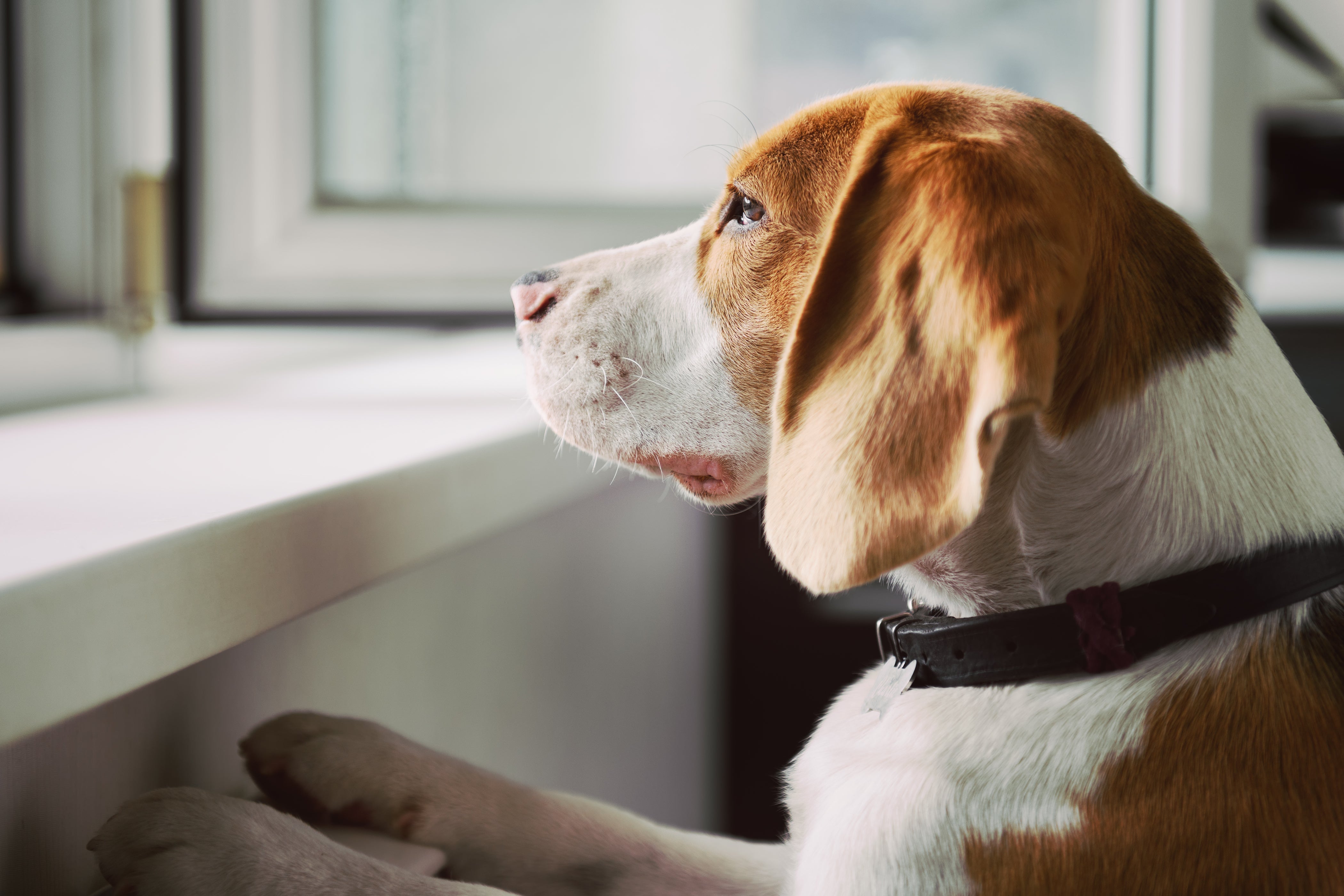
Separation related behavior in dogs is often simplified as separation anxiety. However, many dogs are not experiencing panic or fear when separated. Instead, they are struggling with separation frustration, a behavioral issue rooted in blocked access, low frustration tolerance, and underdeveloped independence skills.
Because separation frustration looks subtle and situational, it is frequently overlooked by dog owners until it escalates into persistent barking, destructive behavior, or barrier reactivity.
What Is Separation Frustration in Dogs?
Separation frustration occurs when a dog becomes distressed because they cannot reach their owner or desired space, even though the owner may still be visible or nearby.
According to veterinary behavior references, frustration based behaviors arise when a dog’s expectations are repeatedly blocked without adequate coping strategies in place (Merck Veterinary Manual: Behavioral Problems in Dogs).
This issue is especially common in puppies and young dogs that have not been taught how to settle independently indoors.
Early Signs of Separation Frustration Owners Often Miss
Many early warning signs are misinterpreted as normal puppy behavior.
Dogs experiencing separation frustration may:
-
Whine or bark when an owner steps behind a door or barrier
-
Paw, scratch, or jump at gates or clear panels
-
Pace or repeatedly reposition instead of settling
-
Become more vocal when attention is delayed
-
Appear calm when fully alone but distressed when access is restricted
Behavior organizations note that frustration behaviors often intensify when the dog can see what they want but cannot reach it (ASPCA: Common Dog Behavior Issues).
Why Separation Frustration Often Develops Indoors
Modern indoor lifestyles unintentionally contribute to frustration based behaviors.
Contributing factors include:
-
Constant free roaming without boundaries
-
Immediate owner response to demand behaviors
-
Overstimulation from open floor plans and movement
-
Lack of structured rest or decompression zones
Dogs need predictable spaces where they can disengage and recover from stimulation. Without these boundaries, dogs may struggle to tolerate even short separations within the home.
Separation Frustration Is Not Separation Anxiety

It is important to clarify that separation frustration is not driven by fear of abandonment.
Behavior experts note that dogs with separation frustration often remain relaxed when left completely alone, while distress emerges when the owner is present but unavailable.
This distinction matters, because frustration based behaviors respond best to environmental structure and impulse control training, rather than anxiety focused desensitization protocols.
How Indoor Environment Design Supports Behavior Regulation
Dog behavior is deeply influenced by the physical environment.
Providing clear, consistent boundaries helps dogs understand when interaction is available and when rest is expected. This reduces emotional overload and builds frustration tolerance over time.
Veterinary behavior literature supports the use of structured spaces to encourage calm, self directed behavior indoors (Merck Veterinary Manual).
Using an Indoor Playpen to Address Separation Frustration

An indoor playpen can be a highly effective management tool for dogs struggling with separation frustration.
Unlike crates or solid barriers, acrylic panels:
-
Maintain visual connection with the owner
-
Reduce social isolation while preserving boundaries
-
Minimize barrier reactivity caused by frustration
-
Encourage calm observation rather than escape behavior
When introduced gradually and paired with enrichment such as chew items or licking mats, a playpen becomes a training aid for independence, not a form of confinement.
This aligns with modern behavior guidance that prioritizes emotional regulation over suppression of behavior (ASPCA).
When Professional Support Is Recommended
If frustration escalates into:
-
Persistent vocalization
-
Destructive attempts to escape
-
Aggression toward barriers
Owners should seek guidance from a certified behavior professional or veterinary behaviorist.
Final Thoughts
Separation frustration is one of the most misunderstood dog behavior challenges in indoor environments. Because the signs often appear mild, many owners delay intervention until habits become ingrained.
By recognizing early warning signals, adjusting the home setup, and using tools like metal indoor playpens thoughtfully, owners can help dogs develop calm independence and healthier emotional responses to separation.
Share:
Why Dogs Become Overstimulated and How to Help Them Calm Down
Cold Weather Dog Care Tips Every Owner Should Know