
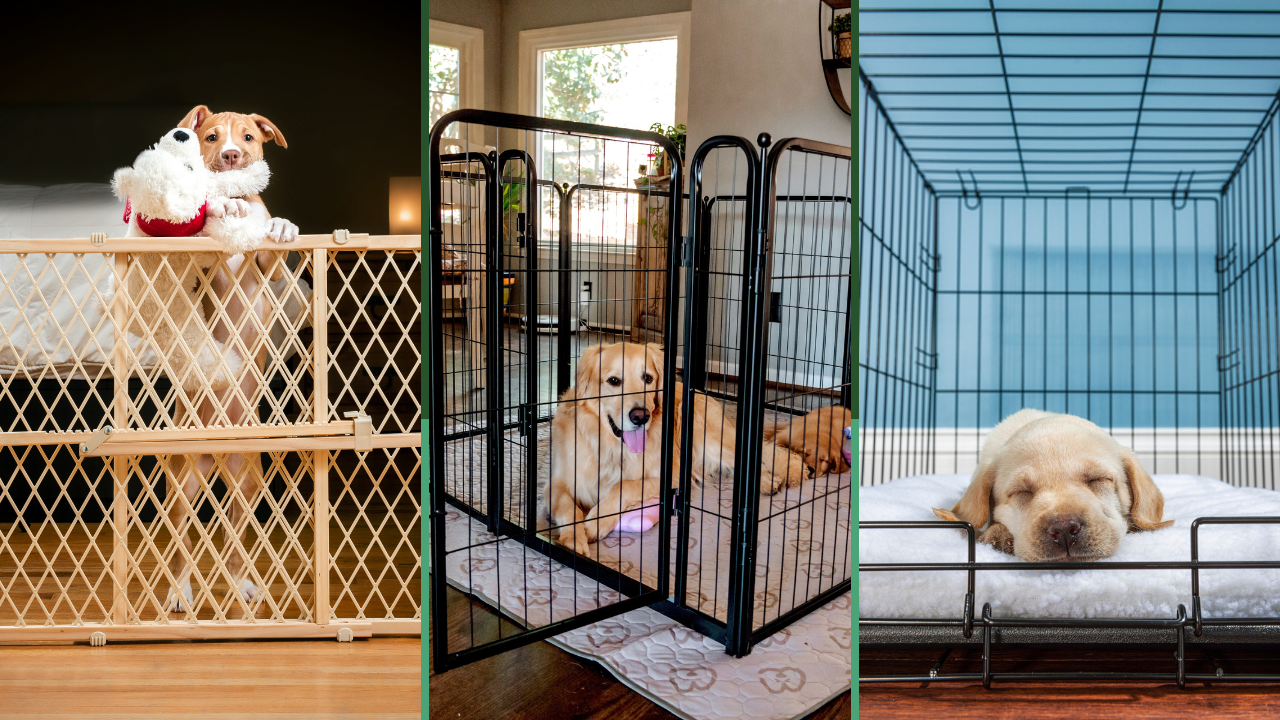
Why Puppies Need a Safe Space
Puppies are full of energy, curiosity, and a desire to explore. While this is part of what makes them so lovable, it also means they can get into trouble quickly, chewing furniture, slipping into unsafe areas, or even hurting themselves.
A safe space is essential for:
-
Keeping your puppy out of danger when you’re busy
-
Preventing destructive chewing or indoor accidents
-
Helping them learn boundaries and routines
-
Giving them a sense of comfort and security
According to AKC, crates provide dogs a sense of security and help reduce anxiety. But what’s the best way to create that safe space? Let’s explore the three most common options: crates, gates, and playpens.
Crates: Structured Training Tools

What Is a Crate?
A crate is a small, enclosed kennel-like structure often used for training and sleeping. Many pet parents use crates to help with potty training, since puppies usually avoid soiling their sleeping area.
Pros of Crates
-
Helps with housebreaking and potty training (PetMD)
-
Provides a cozy, den-like spot
-
Useful for travel and car safety
-
Encourages downtime for energetic puppies
Cons of Crates
-
Limited space: puppies can’t move around freely
-
Overuse may cause anxiety or frustration
-
Not a long-term play solution
Best use: Crates are most effective for short naps, overnight sleep, travel, and may not be a full-time containment option.
Gates: Blocking Access

What Are Dog Gates?
Dog gates are barriers placed in doorways or hallways to keep puppies out of certain areas, like the kitchen or stairs.
Pros of Gates
-
Easy to install and move
-
Keeps unsafe areas off-limits
-
Gives puppies access to larger rooms without full freedom
Cons of Gates
-
No designated “safe zone”, just blocks access
-
Some puppies treat gates as climbing challenges
-
Not suitable for outdoor use
If you’ve ever wondered how to stop a puppy climbing out of a pen or over a gate, you’re not alone. Many pups view gates as puzzles to solve, which can make them less reliable.
Best use: Gates work well for restricting access indoors but aren’t escape-proof solutions.
Playpens: The Flexible Safe Zone

What Is a Playpen?
A dog playpen is an enclosed area that gives puppies room to play, nap, and relax safely. Unlike crates, playpens allow more freedom while still maintaining boundaries.
Pros of Playpens
-
Offers more space than crates
-
Provides a safe environment for play and rest.
-
Suitable for both indoor and outdoor use
-
Portable: easy to set up and move
-
Available in escape-proof and climb-proof designs
- DIY extension: playpens can expand or adapt to fit any space
Veterinary behaviorists at VCA highlight that confinement or a designated safe area helps when puppies can’t be supervised, preventing house-training mistakes.
Cons of Playpens
-
Requires floor or yard space
-
Lower-quality pens may tip or allow climbing
A well-designed playpen, especially an escape-proof puppy pen, addresses the most common problem pet parents face: how to stop a puppy climbing out of the pen. With higher panels and sturdy materials, a climb-proof dog pen ensures your pup stays safe where they belong.
Best use: Everyday safe containment indoors, in the backyard, or while camping.
Comparing Crates, Gates, and Playpens

From this comparison, it’s clear: crates and gates serve useful purposes, but for overall safety and comfort, a playpen is often the best option.
How to Stop Your Puppy from Climbing Out of the Pen
Many new pet parents ask: “How do I stop my puppy climbing out of the pen?” Here are some practical solutions:
-
Choose a Climb-Proof Dog Pen
Look for pens with higher panels, sturdy locks, and strong materials that discourage climbing.
-
Provide Distractions
Fill the playpen with toys, chew items, and cozy bedding so your puppy is less tempted to escape.
-
Avoid Leaving Them Too Long
Boredom fuels escape attempts. Keep pen time balanced with play, exercise, and training.
-
Train Boundaries
Reward your puppy for calm behavior inside the pen, teaching them it’s a safe, happy space, not a prison.
Which Option Should You Choose?
-
Crates: Great for potty training and naps, but not for active play.
-
Gates: Useful for blocking areas, but not escape-proof.
-
Playpens: Provide freedom, safety, and flexibility, especially if you choose an escape-proof puppy pen.
Conclusion
Keeping your puppy safe doesn’t have to be stressful. By understanding the strengths and weaknesses of crates, gates, and playpens, you can create the perfect setup for your home. If you want peace of mind and a secure space where your pup can play without worry, a climb-proof, escape-proof dog playpen is often the safest and most practical choice.
Your puppy gets the freedom they need. You get the peace of mind you deserve.
Share:
How to Break Up a Dog Fight: A Complete Guide to Staying Safe
How to Secure a Dog in an RV?