
Introduction
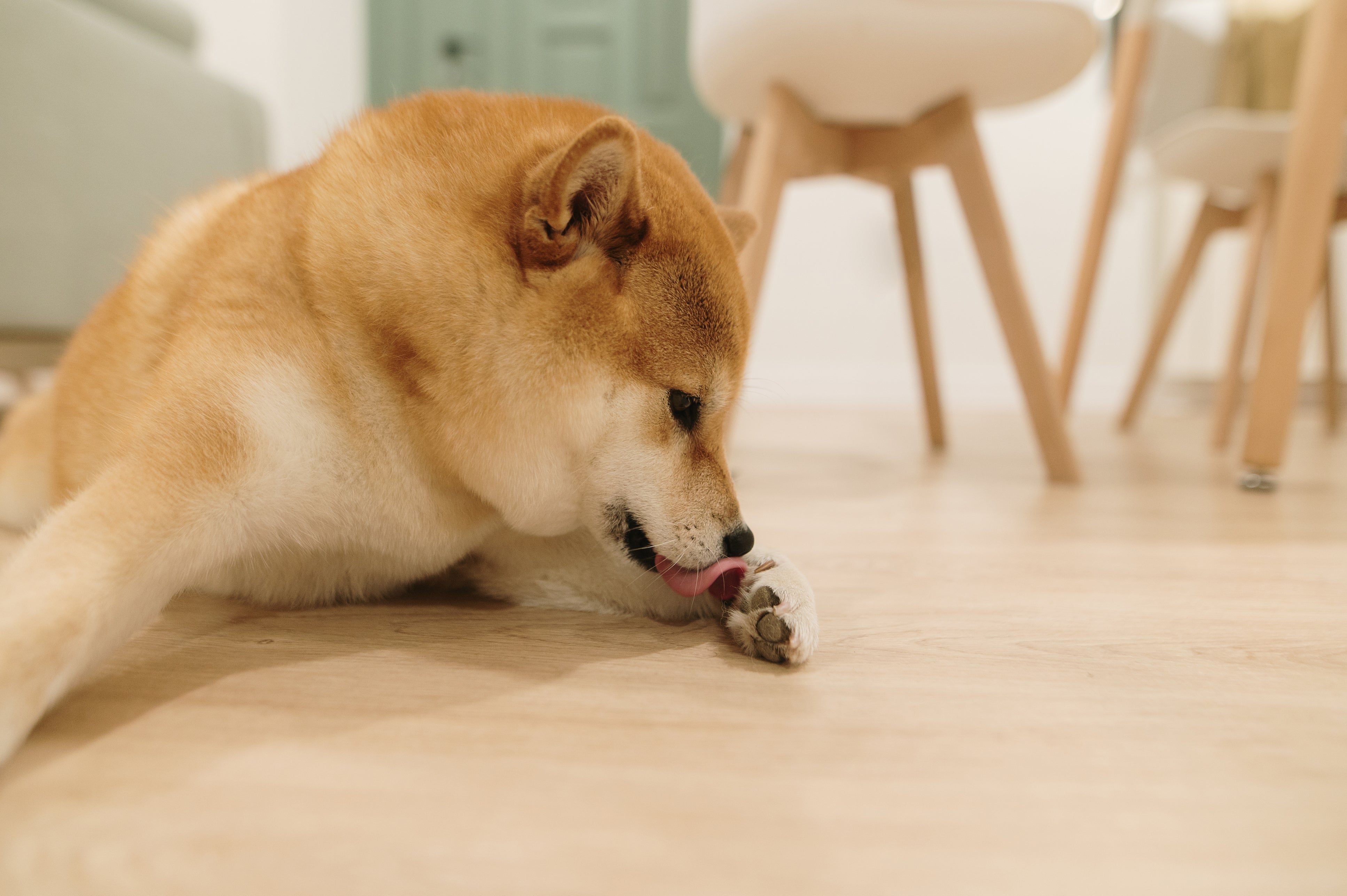
Does your dog rip the skin out off their paws by licking?
Don’t worry, that’s a very common thing among dogs and today we will discuss all the reasons why they do that. We will also talk about the remedy you can look forward at to stop or help them heal the skinned paws!
Understanding the Reasons Behind Paw Licking
-
Medical vs Behavioral Causes
Dogs lick their paws to relieve stress—it is part of their coping mechanism. Allergies from food, grasses, or household cleaning products can cause overlicking of the paws. (VCA Pododermatitis).
-
Allergies and Skin Irritations
Common injuries, cuts, or splinters can cause this behavior, and it is also a symptom of more serious conditions, like fungal infections.
According to Paoli Vetcare, allergies are one of the most frequent medical triggers behind excessive paw licking, especially when the paws become red or inflamed.
-
Boredom and Anxiety as Underlying Causes
It is also part of their grooming behavior—the animal might lick itself due to stress or as an activity to pass the time. Separation anxiety or lack of adequate physical exercise triggers compulsive behavior.
Four Paws explains that many dogs lick their paws simply because they are stressed or bored, and this can evolve into a repetitive habit.
Assessing Your Dog’s Condition
Ignoring frequent paw licking can exacerbate infections, sores, or behavioral changes. To begin with dealing with this problem, inspect your dog's paws for visible injuries or irritants such as debris or redness.
Infection would be noticeable through the presence of pus or a foul odor. Clean the paws gently with warm water and mild antiseptic if needed. Environmental allergens or food intolerances can trigger excessive licking. Tracking your dog’s exposure to potential allergens can help identify the culprit.
For allergies, a vet can suggest diets that are hypoallergenic or medicated shampoos. Keep your dog supplied with engaging toys and keep it regularly exercised to reduce anxiety-related licking.
Preparing for Home Remedies
You can use a natural deterrent, such as a bitter-tasting paw spray, to discourage licking behavior. However, if the behavior persists or worsens, you must seek professional advice from a veterinarian to rule out infections or other health issues.
Before using any home remedy, verify that the ingredients are dog-safe. Avoid substances like undiluted essential oils. Products with xylitol are toxic to dogs; keep that thing in mind.
Home Remedies for Stopping Paw Licking

-
For some minutes, soak your dog's paws in a solution of equal parts apple cider vinegar with water. Its antifungal properties will soothe the itchiness and inflammation.
-
Use coconut oil on your dog's paws to moisturize and help reduce the swelling. Antimicrobial action also prevents infection.
-
Mix Epsom salt with warm water to immerse your dog's paws. This home remedy can reduce swelling and discomfort.
-
Prepare chamomile tea, let it cool down, and immerse your dog's paws. The anti-inflammatory effect of chamomile will help soothe irritations.
Homemade Sprays to Deter Licking
-
Add equal amounts of apple cider vinegar and water, then spray it onto your dog's paws. This remedy prevents the action of licking without irritating the skin.
-
Mix bitter lemon with water, then spray on the paws of your dog. The sour taste, quite naturally, will make them stop licking.
-
Mix a few drops of lavender essential oil with water. Lavender soothes anxiety and is aversive to licking.
Protective Paw Wraps
-
Using Soft Booties for Protection
Dog socks or booties can limit your dog's access to its paws. This behavior provides comfort and protection.
-
DIY Bandage Techniques
Bandage your dog's paws with a breathable bandage. Be sure it's snug but not too tight, and don't use adhesive materials directly on the fur.
Dietary Adjustments to Reduce Paw Licking
-
Switching to Hypoallergenic Dog Food
If allergies are suspected, the vet may recommend changing your dog's diet. They usually prescribe hypoallergenic dog food. A diet that avoids common allergens, such as chicken or grains, will minimize the irritant.
-
Adding Omega-3 Supplements
Omega-3 fatty acids enhance the skin health of a dog by decreasing inflammation. A well-known supplement used for dogs is fish oil capsules.
-
Anti-Inflammatory Herbs and Supplements
Natural remedies such as turmeric or chamomile (in safe quantities) can be beneficial.
Creating a Stress-Free Environment

Reduce stressors such as noise, alterations to routine, or depression from isolation.
Provide a variety of toys, puzzle feeders, or other new activities for stimulation. Some exercise also reduces stress and boredom.
A comfortable dog bed also plays an important role in reducing paw licking. When your dog has a soft, clean place to rest, they avoid contact with hard or dirty surfaces that may irritate their paws. Many dogs feel more secure when they have a designated space to relax, which helps lower stress levels and reduces anxiety-driven paw licking.
Behavioral Interventions
-
Redirecting Your Dog’s Attention
Provide toys or treats whenever you catch your dog pawing. Distracting your dog through repeated exercises helps break the behavior.
-
Teaching the “Leave It” Command
Train your dog to respond to the "leave it" command and discourage them from pawing. Reward them positively when they obey.
-
Positive Reinforcement for Calm Behavior
Praise and reward your dog for adopting alternative, acceptable behaviors.
Grooming Tips for Healthier Paws
Pets usually roam around here and there. Clean your pet’s paw after walks to remove allergens, dirt, and chemicals. Keep the fur between your dog's pads short to prevent matting, which can cause irritation. Apply pet-safe balms or coconut oil to keep paw pads soft and crack-free.
Monitoring Your Dog’s Progress
-
Record when and how often your dog licks its paws
-
Record changes in the environment or triggers to look for patterns
-
Check your dog's paws every week to see if the treatments are working
When to Consult Your Veterinarian?
If the paw licking does not stop even after home remedies, take your dog to a veterinarian. Such a problem would need medical attention. The reason your cat is licking will be able to be found and treated by your vet. Also, if needed, they will be able to suggest other methods.
Medical Treatment for Serious Conditions
For severe conditions, veterinarians may prescribe drugs. They also carry out allergy tests or use medicated shampoos. You should talk to your vet about what the best thing to do is. They can also tell you how to keep your dog from biting in the future.
Common Mistakes to Avoid
-
Avoid toxic substances such as garlic, onions, or undiluted essential oils when creating a deterrent
-
Before you conclude that this is purely a behavioral issue, rule out any medical causes
Frequently Asked Questions
Q1. How often do I apply home remedies?
Treatments such as soaks or sprays 1-2x/day until symptoms improve.
Q2. Is paw-licking always indicative of an illness?
No, it can be a result of boredom or anxiety too. Look at your dog's environment and habits
Q3. I want to use essential oils on my dog's paws. Is this safe?
Only using pet-safe oils such as diluted lavender. Should not apply undiluted oils directly
Q4. My dog won't tolerate the application of paw soaks or sprays.
Use diversions such as treats or toys while undergoing the treatment to make the activity acceptable.
Q5. How would I know if the condition is an allergy?
Allergy symptoms are usually similar in dogs to what we see in humans. They also sneeze, rub their eyes and get rashes on affected patches of the skin. Be observant and look for patterns. It may lick more during certain seasons or with particular meals.
Putting together these treatments and prevention methods can help your dog stop the paws licking habit and put it in better health.
Share:
House Training an Adult Dog: Tips, Techniques, and Success Strategies
Why Dogs Love to Chew and How to Redirect the Behavior Properly